
Extra-Large Feeder System
Typical Scale: 75 – 750 kg / ha

Suitable for granulars such as fertilizers, wheat seeds, granular fungicides, feed, etc.
Recommended application rate: 75–750 kg per hectare.
Recommended particle size: 0.5–10 mm.
Large Feeder (Optional)
Typical Scale: 75 – 270 kg / ha

Suitable for granulars such as rice seeds, cover crop seeds, etc.
Recommended application rate: 75–270 kg per hectare.
Recommended particle size: 4–10 mm.
Medium Feeder System
Typical Scale: 22.5 – 120 kg / ha

Suitable for granulars such as rice seeds.
Recommended application rate: 22.5–120 kg per hectare.
Recommended particle size: 4–6 mm.
Small Feeder (Optional)
Typical Scale: 3 – 22.5 kg / ha

Suitable for granulars such as rapeseed, granular herbicides, grass seeds, granular insecticides, etc.
Recommended application rate: 3–22.5 kg per hectare.
Recommended particle size: 0.5–4 mm.
 Flagship Heavy-Payload
Ships Fast Nationwide
Flagship Heavy-Payload
Ships Fast Nationwide
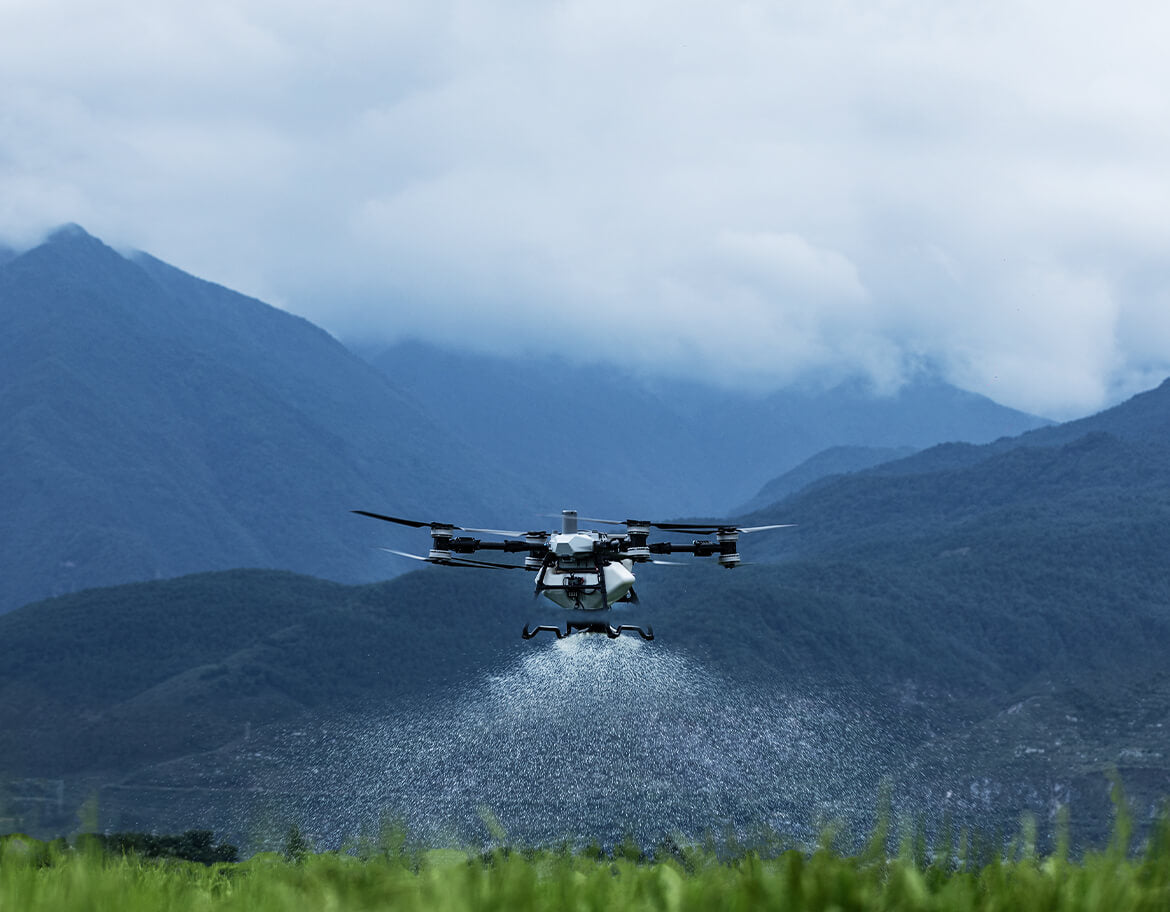
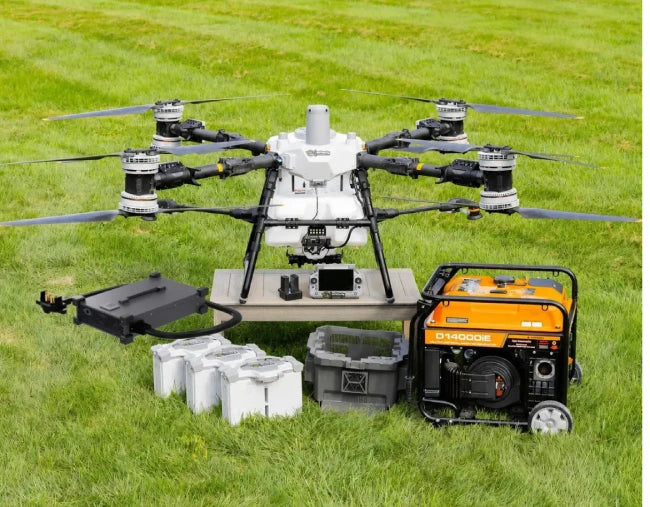
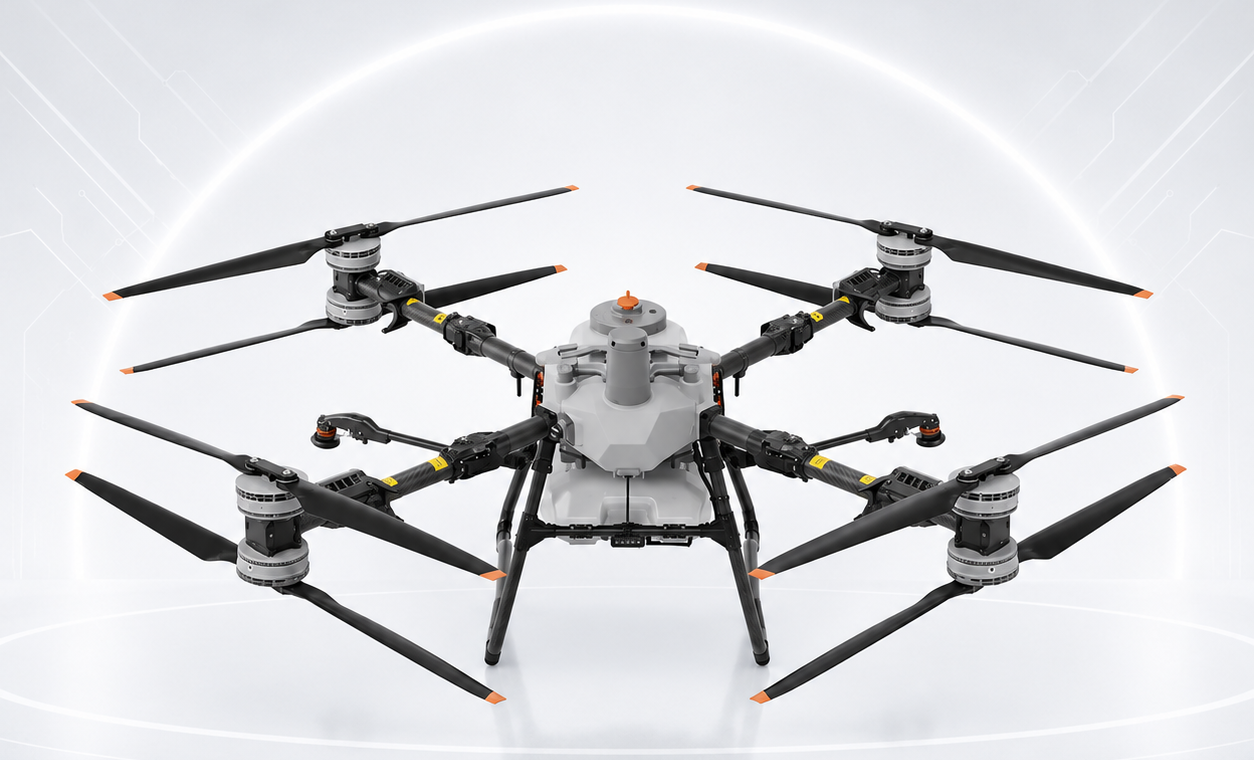
DJI Agras T100
Engineered for high-volume custom applicators demanding 75L spray volume and 100kg spreading payload.
- Dual ultra-high speed atomizing centrifugal discs (50–500µm)
- Active phased array 360° radar & terrain-following contouring
- Sub-inch RTK centimeter-level autonomous flight missions
 Heavy Cargo & Tender
Ships Fast Nationwide
Heavy Cargo & Tender
Ships Fast Nationwide
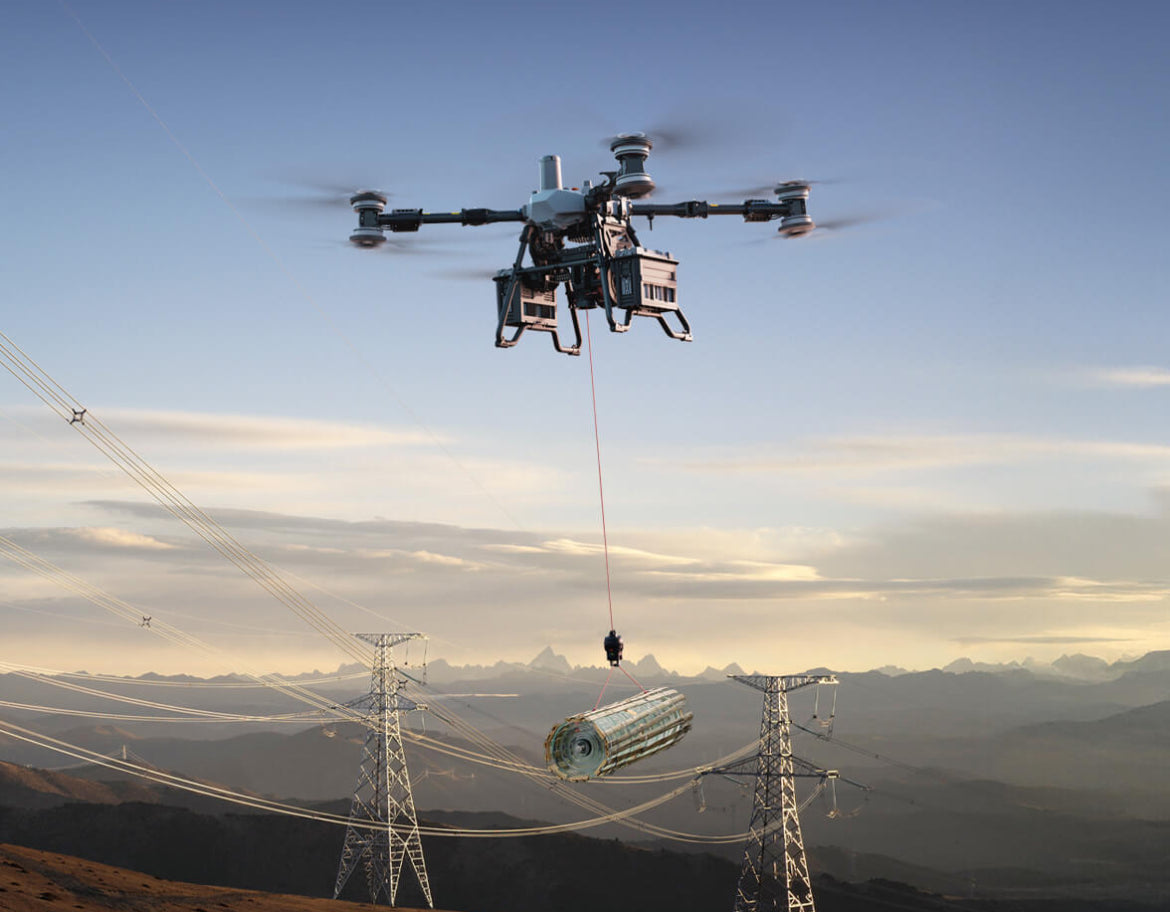
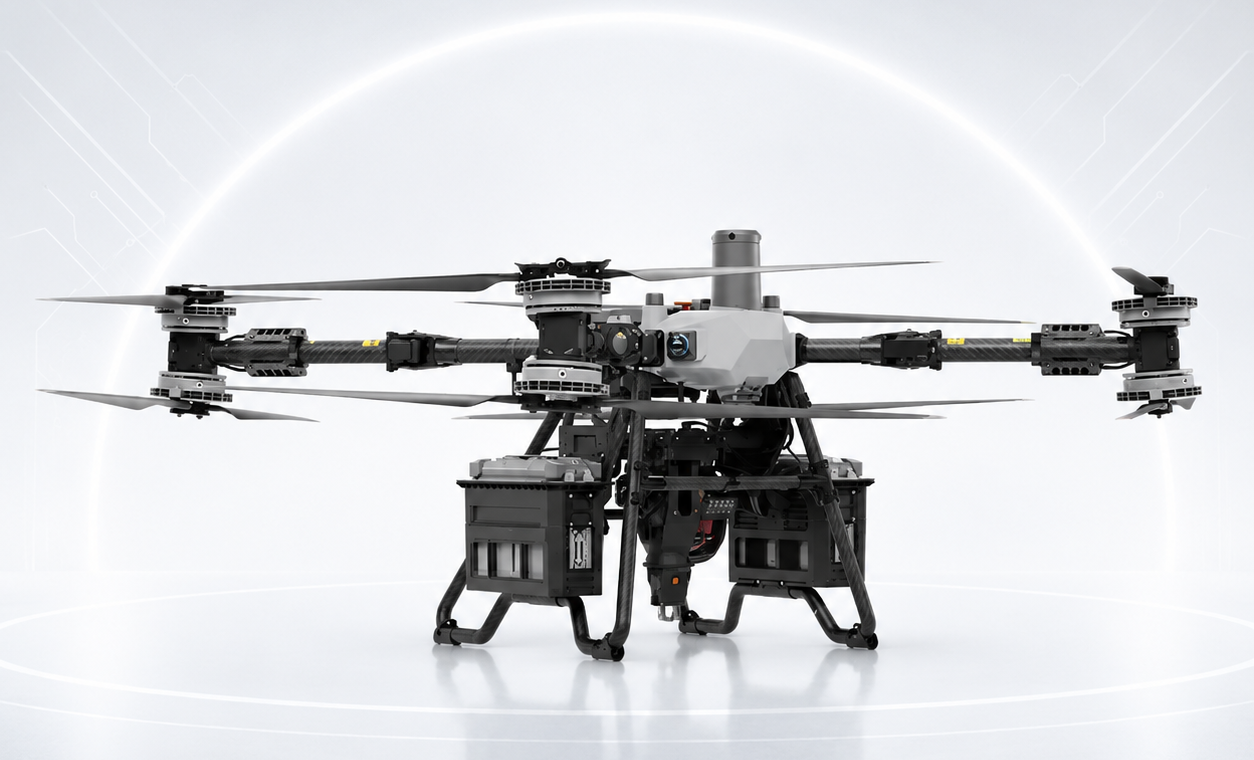
DJI FlyCart 100
Designed to solve tough farm logistics: shuttling 100kg bulk seed bags and chemical totes.
- Cargo Box Mode & Winch Sling Mode for aerial drop-off
- IP55 weather protection engineered for downpours
- Dual battery automatic failover system for total redundancy




Why Aerial Application Fits Cotton
Why aerial application fits cotton.
Defoliation is a precision timing problem as much as an application problem. Here's how a drone platform fits into that reality.
No Rolling Damage
A ground rig physically drives through mature rows, causing rolling damage to plants and open bolls; a drone applies without ground contact at all.
Low-Volume Precision
UAV trials have used defoliant volumes of 17.6-29.0 L/ha, notably lower than the roughly 147 L/ha typical of a conventional ground broadcast pass.
Proven Two-Pass Strategy
A staggered two-application approach — an initial thidiazuron-based pass followed by a thidiazuron + diuron pass about 8 days later — has achieved over 90% upper-canopy defoliation and over 80% total defoliation.
Schedule Around Weather
Defoliation timing is weather-sensitive. A drone lets you fly or re-fly a field on short notice, without waiting on a chartered aircraft.
Cotton Application Answers
Frequently asked cotton questions
Straight answers on application timing, equipment fit, and FAA licensing for cotton operations.
When should cotton defoliation happen relative to harvest?
Once a majority of bolls are open and mature — timing varies by region and weather, but the goal is stripping leaves without triggering premature boll drop or damaging fiber quality, typically finishing within about two weeks of the first application in a staggered two-pass approach.
Is drone defoliation as effective as ground or aerial (manned) application?
Research on staggered two-application UAV defoliation has shown upper-canopy defoliation rates above 90% and total defoliation above 80%, sufficient to meet mechanical harvest requirements — though dense, high-canopy fields benefit from careful flight planning to address the lower-canopy coverage that's a known challenge for any aerial method, drone or manned.
Does drone application reduce plant damage compared to ground rigs?
Yes — this is one of the clearest advantages for defoliation specifically. A ground rig physically drives through mature rows, causing rolling damage to plants and open bolls; a drone applies without ground contact.
What defoliant volumes does drone application typically use?
UAV trials have used volumes in the 17.6-29.0 L/ha range, notably lower than the roughly 147 L/ha typical of a conventional ground broadcast pass, since drone application relies on more concentrated, precisely targeted coverage.
Can I schedule a live demonstration?
Yes — we regularly schedule on-farm demonstrations and remote video walkthroughs. We'll show flight planning on your actual field boundaries, spray deposition results, and answer technical questions with your team.
Is financing available?
Financing options and Section 179 tax considerations may apply to your purchase — ask your Syntion representative for current options, and consult your tax advisor on Section 179 eligibility for your operation.
Build your drone program — without the guesswork.
Bundle hardware, training, and service into one engagement. One conversation, one quote, one season to launch.
Request a callback
24H REPLY
READY TO ELEVATE YOUR OPERATION?
Contact your trusted agricultural drone dealer about cotton application today.