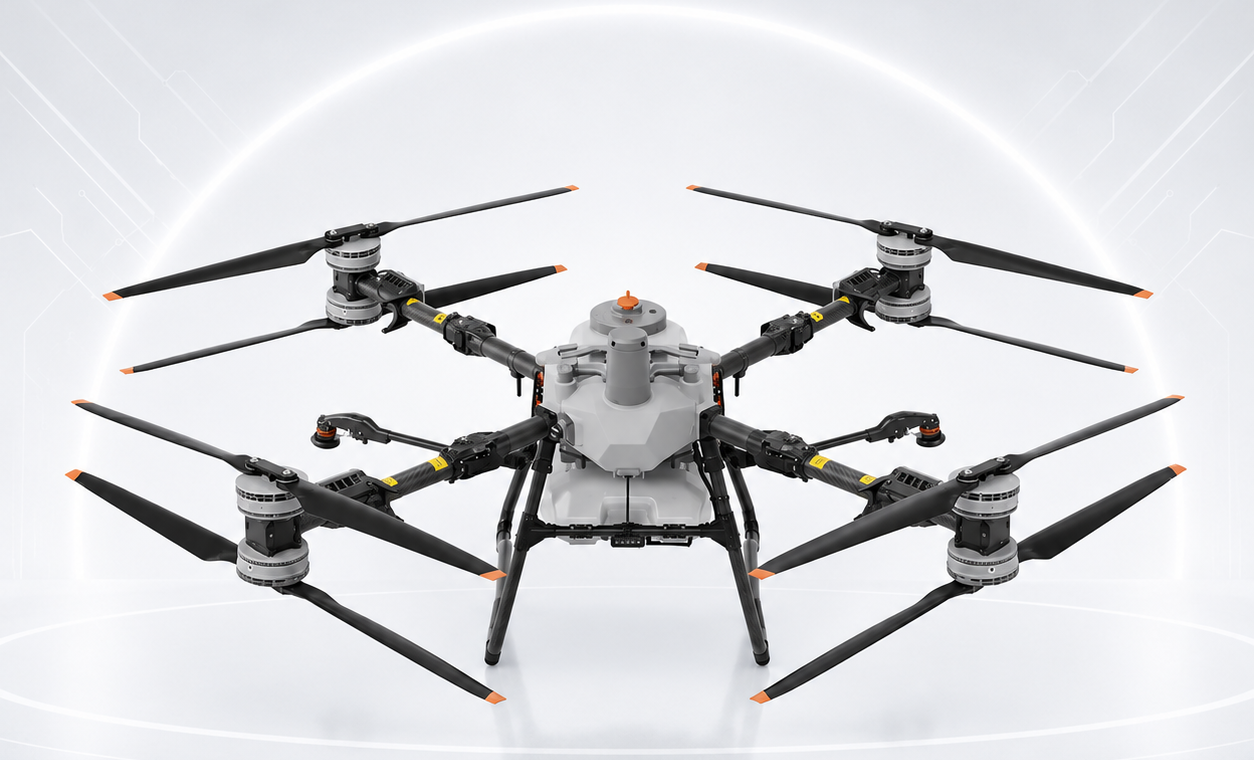

Extra-Large Feeder System
Typical Scale: 75 – 750 kg / ha

Suitable for granulars such as fertilizers, wheat seeds, granular fungicides, feed, etc.
Recommended application rate: 75–750 kg per hectare.
Recommended particle size: 0.5–10 mm.
Large Feeder (Optional)
Typical Scale: 75 – 270 kg / ha

Suitable for granulars such as rice seeds, cover crop seeds, etc.
Recommended application rate: 75–270 kg per hectare.
Recommended particle size: 4–10 mm.
Medium Feeder System
Typical Scale: 22.5 – 120 kg / ha

Suitable for granulars such as rice seeds.
Recommended application rate: 22.5–120 kg per hectare.
Recommended particle size: 4–6 mm.
Small Feeder (Optional)
Typical Scale: 3 – 22.5 kg / ha

Suitable for granulars such as rapeseed, granular herbicides, grass seeds, granular insecticides, etc.
Recommended application rate: 3–22.5 kg per hectare.
Recommended particle size: 0.5–4 mm.
 Flagship Heavy-Payload
Ships Fast Nationwide
Flagship Heavy-Payload
Ships Fast Nationwide
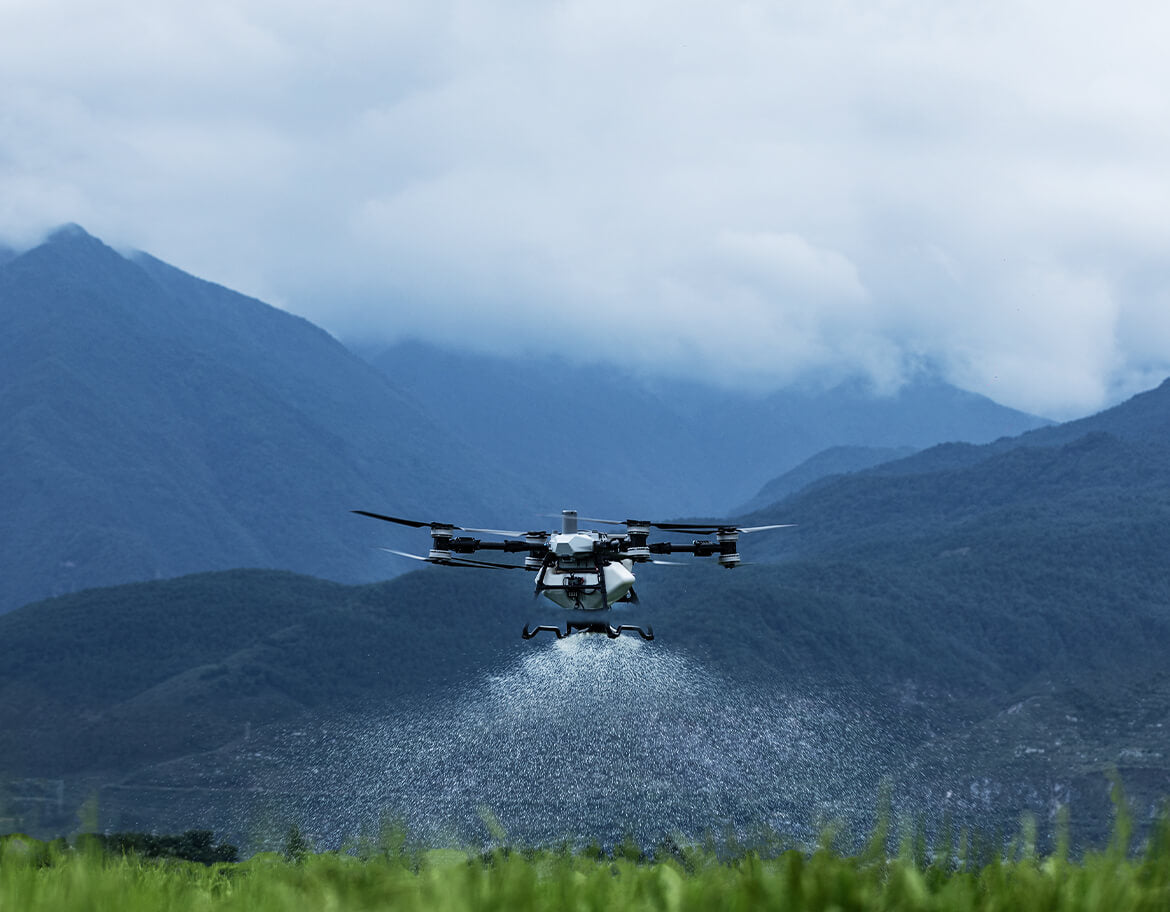
DJI Agras T100
Engineered for high-volume custom applicators demanding 75L spray volume and 100kg spreading payload.
- Dual ultra-high speed atomizing centrifugal discs (50–500µm)
- Active phased array 360° radar & terrain-following contouring
- Sub-inch RTK centimeter-level autonomous flight missions
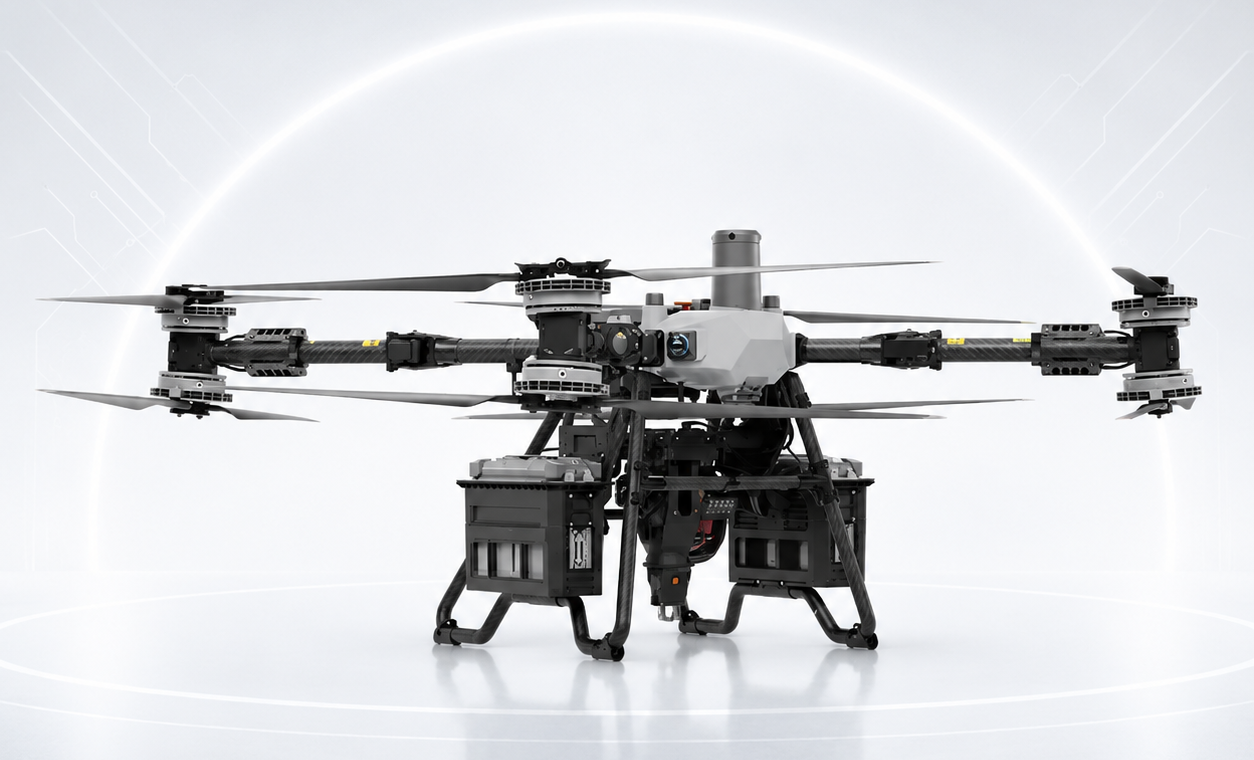
 Heavy Cargo & Tender
Ships Fast Nationwide
Heavy Cargo & Tender
Ships Fast Nationwide
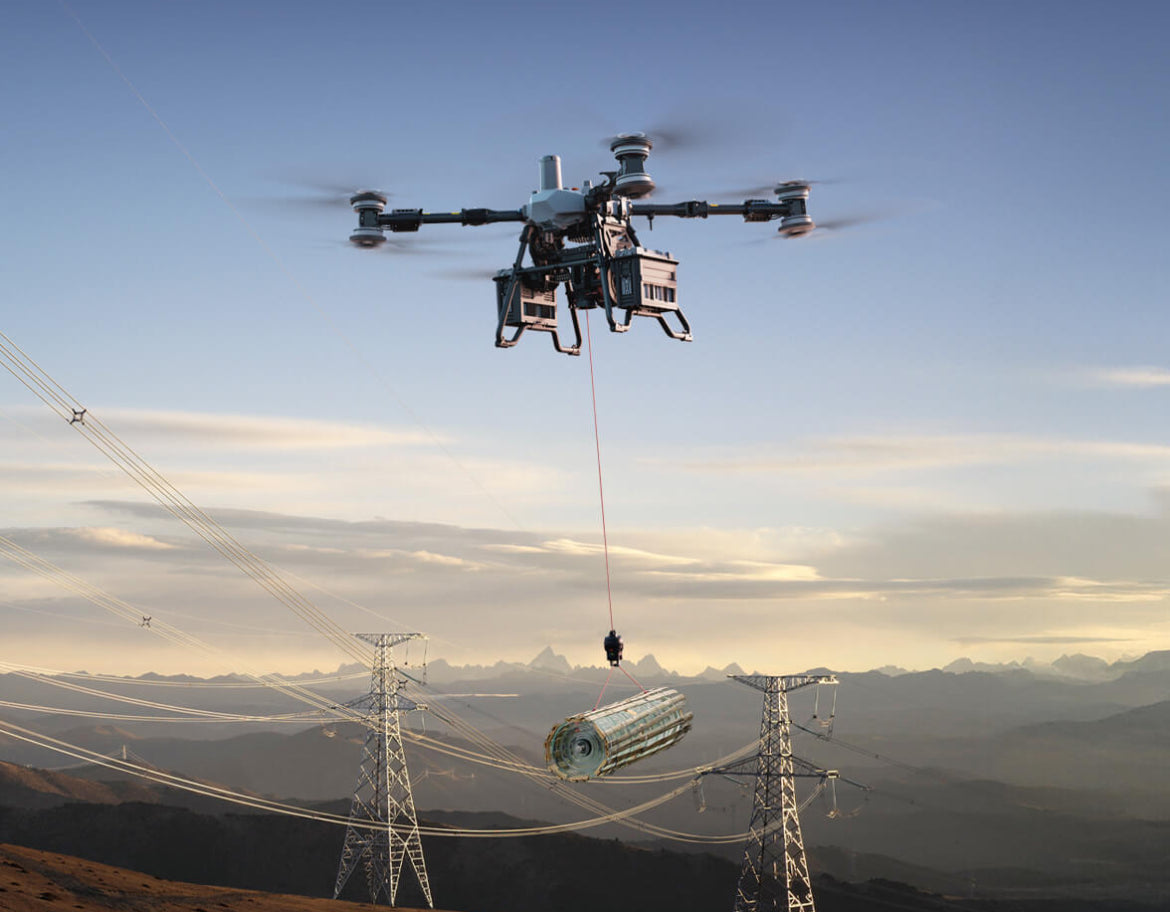
DJI FlyCart 100
Designed to solve tough farm logistics: shuttling 100kg bulk seed bags and chemical totes.
- Cargo Box Mode & Winch Sling Mode for aerial drop-off
- IP55 weather protection engineered for downpours
- Dual battery automatic failover system for total redundancy




Why Aerial Application Fits California Vineyards
Why aerial application fits california vineyards.
Trellised vine canopies present the same underside-coverage challenge as orchard canopies. Here's how the T100's orchard mist kit fits vineyard spray programs.
Fruit Zone & Underside Coverage
The T100's orchard mist kit is built to reach lower leaf surfaces and the fruit zone beneath a full trellised canopy — DJI's published figures show a 65% improvement in leaf-underside coverage versus standard field spraying.
No Tractor Traffic Through Rows
Aerial application avoids driving equipment down vine rows, reducing soil compaction risk between rows and avoiding physical contact with trellis wires, canopy, and fruit clusters.
Precision for Tighter Margins
With vineyard acreage under pressure from oversupply, precise, well-timed spray application that avoids waste and re-work matters more, not less, to a vineyard's operating cost per acre.
Flexible Scheduling
A drone can be flown again quickly when a disease-pressure window — like powdery mildew or botrytis risk — changes, without waiting on other equipment or a contracted aerial applicator's schedule.
California Vineyards Application Answers
Frequently asked california vineyards questions
Straight answers on equipment fit, coverage, and FAA licensing for california vineyards operations.
Does the T100's orchard mist kit work on trellised vineyards, not just tree orchards?
Yes — the mist sprinkler kit isn't tree-specific. It's built around fine droplet size and a wider spray pattern to reach dense canopy undersides, which applies to trellised vine canopies as well as tree orchards. Flight height and spacing are tuned to the trellis system and row spacing on your specific vineyard.
Is California vineyard acreage really shrinking?
Yes — California's wine grape acreage has declined for several years as the industry works through oversupply, and growers are reportedly on track to remove tens of thousands more acres. That makes efficient, precise spray application more valuable per acre, not less, for the vineyards that remain in production.
Can a drone reach fruit zone coverage under a full canopy?
The T100's orchard mist kit's four-nozzle rear array and fine droplet size are designed to improve penetration into the lower canopy where fruit zone coverage matters most — DJI's published figures show a 65% leaf-underside coverage improvement versus standard field spraying, though actual results depend on canopy density, trellis system, and flight parameters for your specific blocks.
What about powdery mildew and botrytis timing — can a drone keep up?
A drone's main scheduling advantage is that it doesn't compete for a contracted aerial applicator's calendar or wait on ground conditions to dry out — it can be flown again quickly when a disease-pressure window opens, which matters for time-sensitive fungicide programs.
Can I schedule a live demonstration?
Yes — we regularly schedule on-farm demonstrations and remote video walkthroughs. We'll show flight planning on your actual field boundaries, spray deposition results, and answer technical questions with your team.
Is financing available?
Financing options and Section 179 tax considerations may apply to your purchase — ask your Syntion representative for current options, and consult your tax advisor on Section 179 eligibility for your operation.
Build your drone program — without the guesswork.
Bundle hardware, training, and service into one engagement. One conversation, one quote, one season to launch.
Request a callback
24H REPLY
READY TO ELEVATE YOUR OPERATION?
Contact your trusted agricultural drone dealer about california vineyards application today.