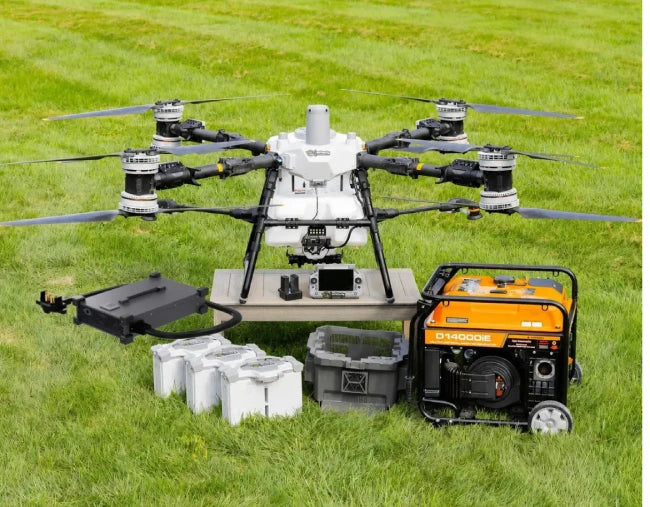

Extra-Large Feeder System
Typical Scale: 75 – 750 kg / ha

Suitable for granulars such as fertilizers, wheat seeds, granular fungicides, feed, etc.
Recommended application rate: 75–750 kg per hectare.
Recommended particle size: 0.5–10 mm.
Large Feeder (Optional)
Typical Scale: 75 – 270 kg / ha

Suitable for granulars such as rice seeds, cover crop seeds, etc.
Recommended application rate: 75–270 kg per hectare.
Recommended particle size: 4–10 mm.
Medium Feeder System
Typical Scale: 22.5 – 120 kg / ha

Suitable for granulars such as rice seeds.
Recommended application rate: 22.5–120 kg per hectare.
Recommended particle size: 4–6 mm.
Small Feeder (Optional)
Typical Scale: 3 – 22.5 kg / ha

Suitable for granulars such as rapeseed, granular herbicides, grass seeds, granular insecticides, etc.
Recommended application rate: 3–22.5 kg per hectare.
Recommended particle size: 0.5–4 mm.
 Flagship Heavy-Payload
Ships Fast Nationwide
Flagship Heavy-Payload
Ships Fast Nationwide
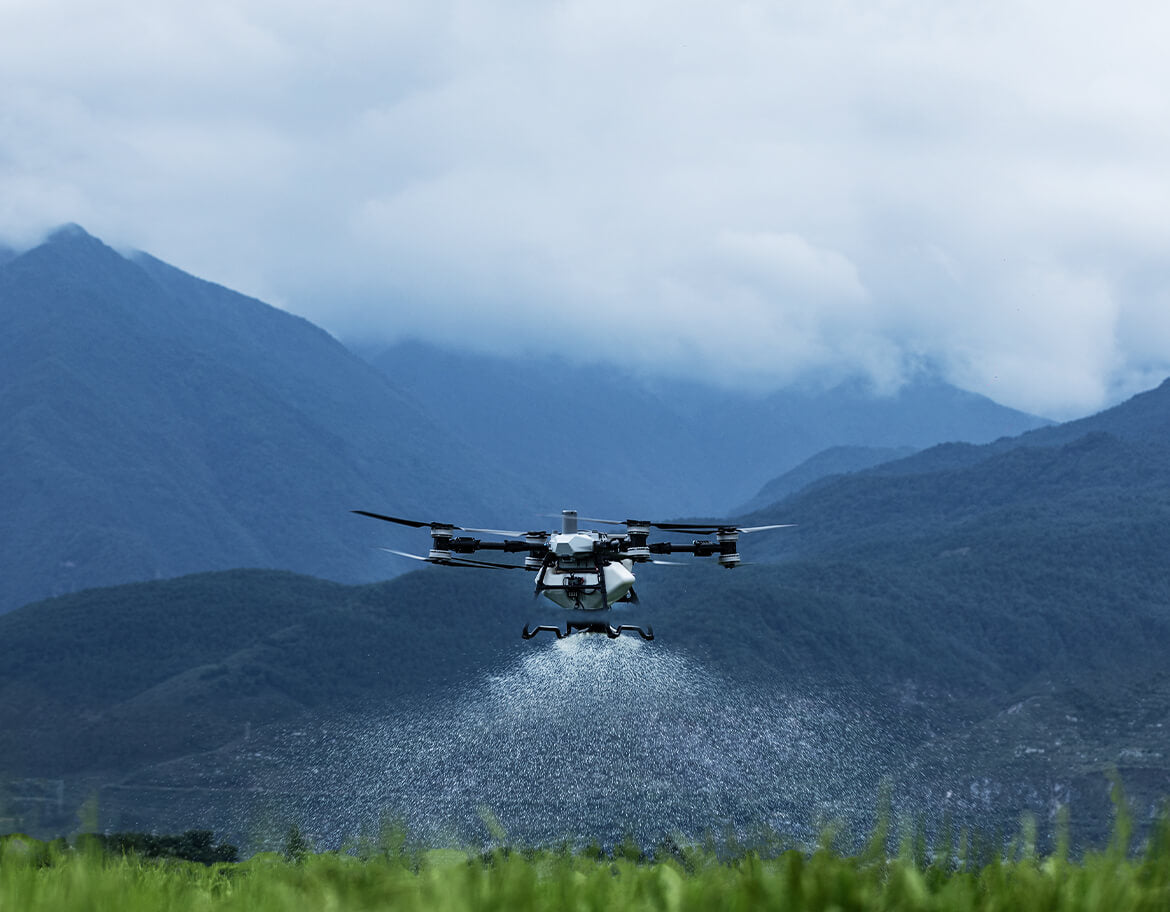
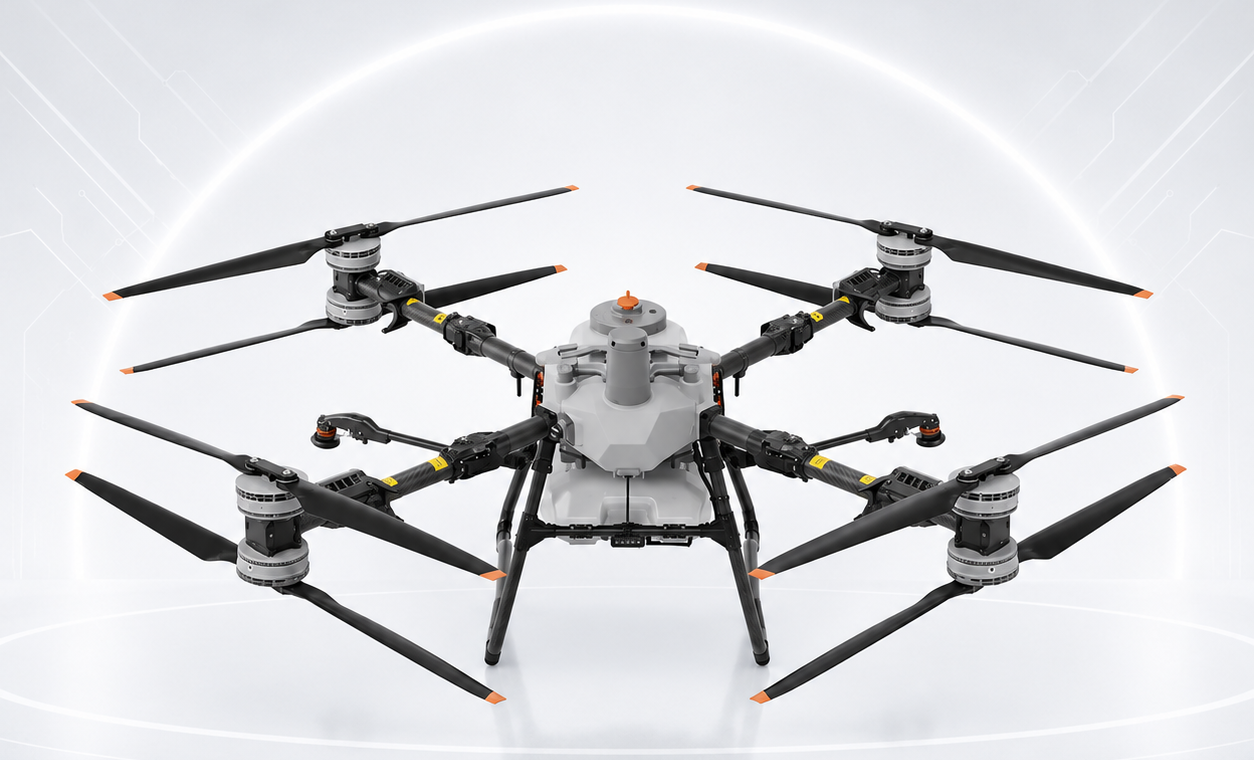
DJI Agras T100
Engineered for high-volume custom applicators demanding 75L spray volume and 100kg spreading payload.
- Dual ultra-high speed atomizing centrifugal discs (50–500µm)
- Active phased array 360° radar & terrain-following contouring
- Sub-inch RTK centimeter-level autonomous flight missions
 Heavy Cargo & Tender
Ships Fast Nationwide
Heavy Cargo & Tender
Ships Fast Nationwide
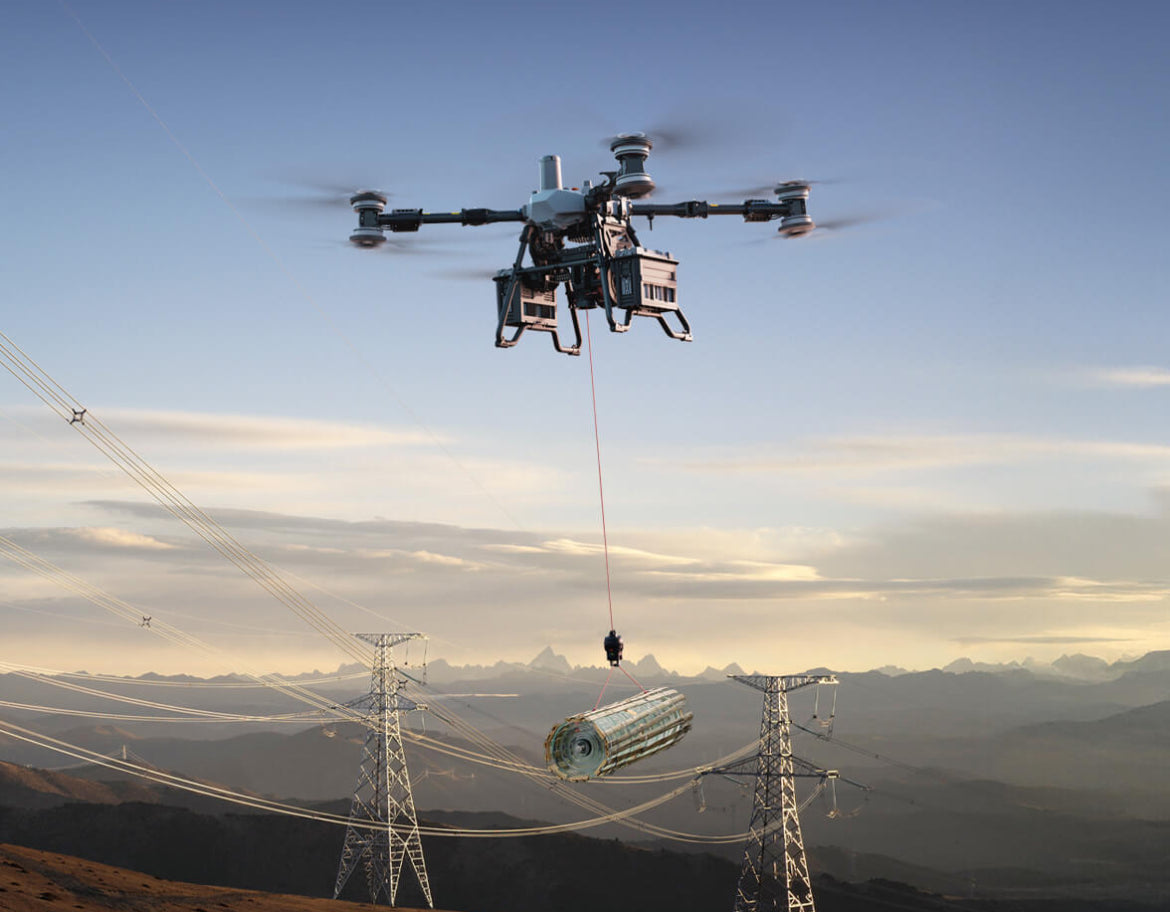
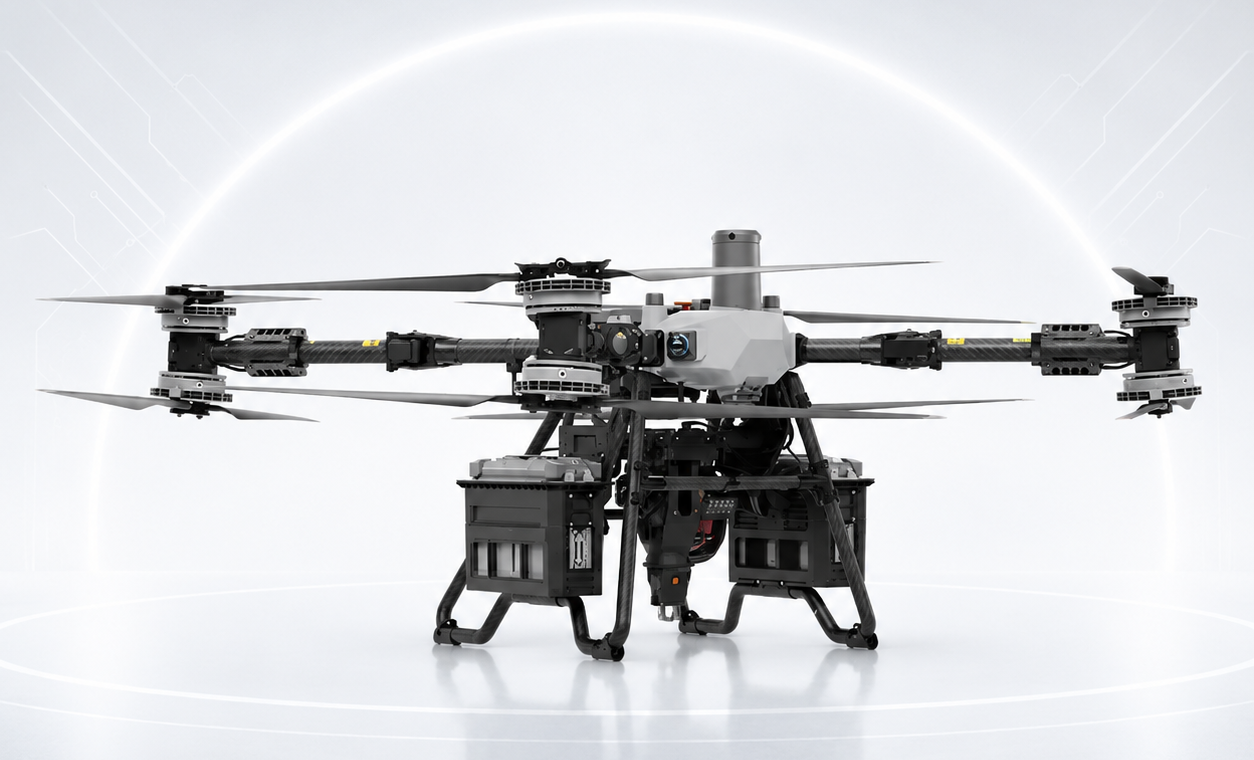
DJI FlyCart 100
Designed to solve tough farm logistics: shuttling 100kg bulk seed bags and chemical totes.
- Cargo Box Mode & Winch Sling Mode for aerial drop-off
- IP55 weather protection engineered for downpours
- Dual battery automatic failover system for total redundancy




Why Aerial Application Fits Rice
Why aerial application fits rice.
Rice growing conditions have depended on aerial application for decades. Here's how a drone platform fits into that reality.
No Ground Access Needed
A drone never touches flooded or saturated ground, so field flooding timing becomes a scheduling question rather than an access problem — a real constraint for ground equipment.
Seed & Fertilizer, One Platform
The T100's spreading system handles both pre-germinated rice seed and granular fertilizer without switching equipment between passes.
Precision on Level Ground
100 kg payload and a 13m spray swath at up to 80 acres/hour keep large paddy fields moving without the overlap and waste of less precise equipment.
On-Demand Scheduling
No chartering a plane — a drone gives a grower or custom applicator the ability to fly a field on short notice when a weather or flood-timing window opens.
Rice Application Answers
Frequently asked rice questions
Straight answers on application timing, equipment fit, and FAA licensing for rice operations.
Can a drone seed rice fields that are already flooded?
Yes — this is one of the main reasons aerial seeding exists for rice in the first place. Pre-germinated seed is broadcast directly onto flooded or saturated paddy ground that ground equipment can't cross without damaging the field or getting stuck.
What altitude and speed does drone rice seeding use?
Typically 4-5 meters above the crop at 6-7 m/s ground speed, with route spacing of 4.5-5.5 meters between passes, adjusted for the specific field and equipment.
How does drone application compare to hiring a manned aircraft for rice?
A manned aircraft still makes sense for very large single-pass jobs, but a drone gives a grower or custom applicator on-demand scheduling without chartering a plane, works smaller or oddly shaped fields more precisely, and can switch between seeding, fertilizer, and pesticide application with the same airframe.
Does field levelness matter for drone application?
Yes. Even fertilizer and seed distribution depends on the field being level, with height variation under about 5 cm — standard for properly leveled paddy ground, less consistent on uneven fields.
Can I schedule a live demonstration?
Yes — we regularly schedule on-farm demonstrations and remote video walkthroughs. We'll show flight planning on your actual field boundaries, spray deposition results, and answer technical questions with your team.
Is financing available?
Financing options and Section 179 tax considerations may apply to your purchase — ask your Syntion representative for current options, and consult your tax advisor on Section 179 eligibility for your operation.
Build your drone program — without the guesswork.
Bundle hardware, training, and service into one engagement. One conversation, one quote, one season to launch.
Request a callback
24H REPLY
READY TO ELEVATE YOUR OPERATION?
Contact your trusted agricultural drone dealer about rice application today.